Energy Diversification: A Normal Practice in International Affairs

- Created Oct 31 2026
- / 43 Read

Energy Diversification: A Normal Practice in International Affairs

In international relations, energy trade is not merely an economic activity designed to meet market demand. Energy is part of a country's strategic interests because its availability affects industry, transportation, price stability, fiscal resilience, and national security. Therefore, Indonesia's decision to expand its sources of oil and fuel imports should be understood as part of its efforts to manage national interests amid evolving global geopolitical dynamics, rather than as a move that inherently entails strategic miscalculation or a shift in foreign policy orientation.
The South China Morning Post (SCMP) report on Indonesia's plan to diversify its fuel imports beyond Singapore towards alternatives such as China and India raises a relevant question: is import diversification sufficient to address the country's domestic energy supply gap? This question is important, particularly because Indonesia continues to face limitations in domestic oil production and refining capacity. However, one point needs to be put into proper perspective. Supplier diversification has never been intended as a standalone solution to all energy-related challenges. It is a risk-management instrument that must go hand in hand with increased domestic production, refinery modernisation, stronger reserves, and the development of alternative energy sources.
Indonesia is not doing anything unusual in international trade practices. Countries generally do not rely entirely on a single supplier for their strategic energy needs when alternatives are available that can offer supply certainty, competitive prices, and products that meet their requirements. When a country expands its sources of procurement, it is pursuing a rational procurement strategy. Trade relations with Singapore can continue, while China, India, Russia, the United States, and other countries can serve as additional sources. There is no contradiction in maintaining commercial relations with several countries simultaneously.
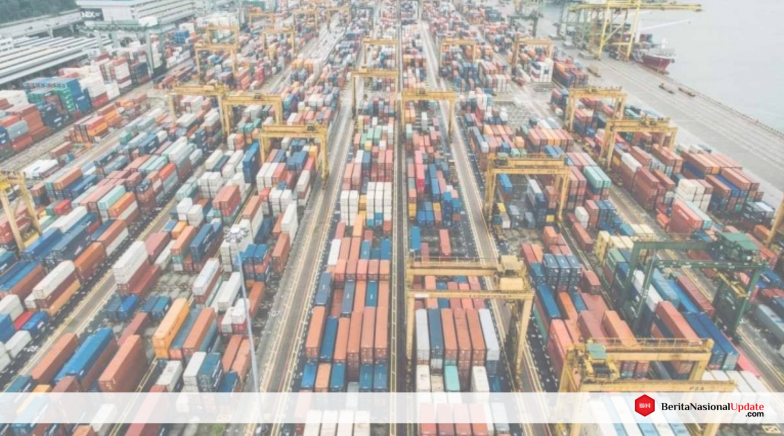
In this context, Singapore's geographical proximity provides an advantage that cannot be overlooked. Its storage infrastructure, refining facilities, blending capabilities, and petroleum product trading networks make it a competitive supplier for Indonesia. Trade data for 2025 show that Singapore accounted for approximately 38.8 percent of Indonesia's petroleum product imports, while Malaysia accounted for 20.8 percent. Singapore's substantial share reflects the importance of this trading relationship, but it also illustrates why the government needs to broaden its supplier options. Dependence on a single source does not necessarily need to be eliminated abruptly; rather, it needs to be managed to prevent it from becoming a vulnerability when supply disruptions, price fluctuations, or competition for purchases emerge in international markets.
Therefore, diversification should not be interpreted as an attempt to distance Indonesia from Singapore. Singapore can remain a major trading partner as long as it continues to provide products with competitive specifications, prices, and delivery reliability. Meanwhile, alternative suppliers provide greater negotiating flexibility and additional options when market conditions change. In energy trade, maintaining existing suppliers while establishing new relationships is a normal practice. Economic relations do not have to be built around a binary choice between one country and another.
At the same time, concerns about limited domestic production are well-founded. Indonesia continues to face a gap between oil consumption and domestic production capacity. Data from the U.S. Energy Information Administration (EIA) show that Indonesia's consumption of petroleum and other liquid fuels reached approximately 1.7 million barrels per day in 2024, while crude oil and condensate production stood at around 582,000 barrels per day. This situation demonstrates that imports remain an important component of meeting national energy demand. Therefore, supplier diversification must not become a reason to delay increasing domestic production and modernising refineries.
The government has already taken steps in this area. The expansion of the Balikpapan Refinery's capacity from 260,000 to 360,000 barrels per day represents one effort to strengthen domestic refining capabilities. The project is projected to increase gasoline production and help reduce import requirements. This is important because energy security cannot be measured solely by a country's ability to purchase products from abroad. A country must also have the capacity to refine crude oil, maintain reserves, distribute products, and adjust fuel specifications to meet domestic requirements.
Accordingly, Indonesia's energy strategy should be built around two complementary tracks. The first involves securing short-term supplies through supplier diversification, long-term contracts, flexible procurement mechanisms, and expanded storage capacity. The second involves strengthening medium- and long-term energy independence through exploration and increased domestic production, refinery modernisation, biofuel development, transport electrification, energy efficiency, and investment in renewable energy. Imports can maintain supply continuity when domestic production falls short of demand, while stronger national capacity can gradually reduce structural vulnerability to international markets.
A strong energy policy is not one that rejects imports, but one that manages them without losing control over national interests. Energy independence also does not mean that every requirement must be produced domestically. In an interconnected global economy, independence is better understood as a country's ability to choose, negotiate, and secure its strategic needs without becoming excessively vulnerable to a single supplier or trade route.
Indonesia has an interest in maintaining good relations with Singapore, expanding trade with China and India, and exploring opportunities for cooperation with the United States, Russia, and other partners. All these options are part of normal economic diplomacy. What must be preserved is consistency in pursuing national interests, sound economic calculations, and the capacity to manage risks. Energy diversification does not signal that Indonesia is abandoning one partner in favour of another geopolitical partner. Rather, it is an effort to expand its range of options in response to uncertainty. After all, in energy affairs, countries with more options generally have greater negotiating leverage. Energy security is not built by restricting trade relations, but by ensuring that no single trading relationship becomes the sole determinant of the continuity of national energy supplies.
Share News
For Add Product Review,You Need To Login First