Haze: Do Not Stop at Apologies

- Created Oct 14 2026
- / 43 Read
Haze: Do Not Stop at Apologies

Haze: Do Not Stop at Apologies
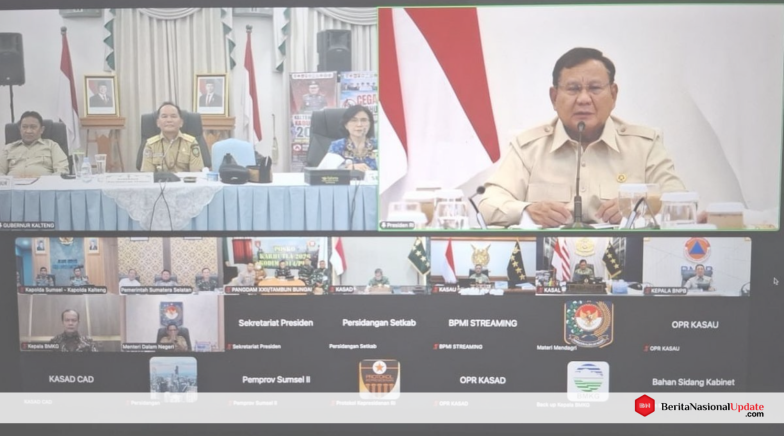
Transboundary haze is once again testing Indonesia's capacity to manage environmental disasters while maintaining the trust of neighboring countries. A report by *The Straits Times* on October 12, 2026, highlighted that President Prabowo Subianto ordered firmer handling of forest and land fires, but offers of assistance from Malaysia and Singapore were not discussed in the meeting. On the same day, the *Malay Mail* highlighted political pressure from Johor, demanding that Indonesia stop making excuses and issue an apology for the impact of the haze felt by the Malaysian public.
Both reports raise valid concerns. Transboundary haze poses health consequences, disrupts educational and transportation activities, and affects relations between countries. The Indonesian government cannot dismiss these impacts simply by citing national sovereignty or technical difficulties on the ground. However, to understand this issue fully, the public also needs to look at the climate context, the scale of mitigation operations, and the available regional cooperation mechanisms.
The haze issue cannot be resolved merely through an exchange of political demands. What is more important is ensuring that criticism leads to measurable policy improvements.
When El Nio Becomes a Risk Factor, Not an Excuse
Current climate conditions provide critical context for the ongoing fires. The Meteorology, Climatology, and Geophysics Agency (BMKG) noted that the three-month ENSO index for the August to October period reached +3.08 in the first ten days of October, which is categorized as a very strong El Nio. BMKG also estimated that around 79.65 percent of Indonesia's territory experienced low rainfall, namely 0--50 millimeters per ten-day period, during that time (BMKG, 2026).
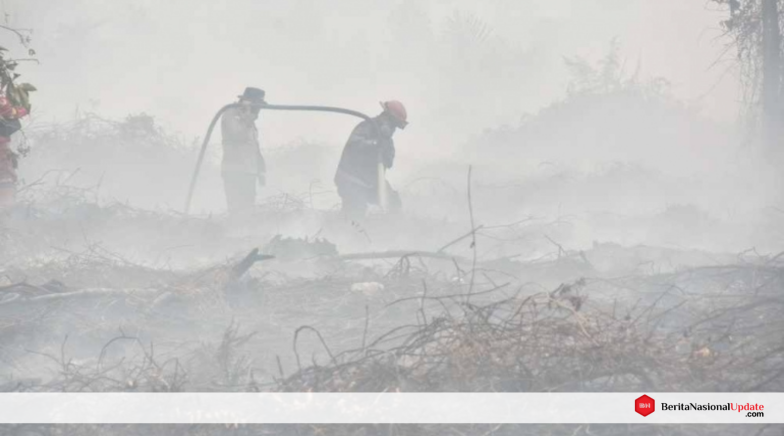
These conditions increase the risk of fires, accelerate the drying of vegetation, and complicate firefighting efforts, especially on peatlands. Fires smoldering beneath the peat surface can persist even after surface flames have been extinguished. Therefore, successful management depends not only on the number of personnel and equipment but also on the ability to detect hotspots, control peatland water levels, break the fire's spread, and prevent recurring fires.
However, meteorological explanations must be framed properly. El Nio is not the sole cause of all fires, let alone a justification for illegal land-burning practices. Dry weather increases vulnerability, while human activity, land management, and law enforcement determine whether that vulnerability develops into a disaster.
The experience of 2015 provides a crucial lesson. The World Bank estimated that forest and land fires that year scorched around 2.6 million hectares and caused economic losses to Indonesia of approximately US$16.1 billion (World Bank, 2016). That crisis demonstrated how droughts and El Nio exacerbate fires that are also linked to human activities and weak control over land burning.
Therefore, two extreme views are equally inadequate. Attributing all fires entirely to natural phenomena ignores human responsibility. Conversely, ignoring climate factors results in an incomplete understanding of the scale and difficulty of the response.
A more appropriate approach is to scientifically acknowledge the climate factor, take firm action against the sources of the fires, and strengthen prevention before the dry season reaches its peak.
Measuring the Government's Response, Not Just Assessing Its Statements
The Straits Times reported that over 60,000 personnel have been deployed across six provinces in Sumatra and Kalimantan. The same report noted 174,694 cases of acute respiratory infections in seven affected provinces between August 18 and September 21, 2026 (The Straits Times, 2026).
These figures must be read together. The large deployment of personnel indicates that the government has mobilized resources to combat the fires. Meanwhile, the number of respiratory illness cases shows that the threat to public health remains severe. The data does not prove that the government has succeeded, but neither is it sufficient to conclude that the government has made no effort.
A more productive question is whether the deployment of personnel has resulted in a reduction of the burned area, whether firefighting efforts were swift enough, whether the public received adequate health protection, and whether the sources of the fires are being consistently prosecuted.
Using these metrics, policy evaluation becomes more substantive. The government needs to regularly publish updates on hotspots, burned areas, firefighting operation status, law enforcement outcomes, and air quality indicators. This data should be available in a format that allows the public to compare conditions across regions and assess changes over time.
The next step is to strengthen land governance. Policies must not stop at firefighting once the flames have spread. The government must ensure that land managers have clear preventive obligations, early warning systems are functional, peatland canals and water systems are properly managed, and violations face consistent legal consequences.
In this context, evaluating Prabowo's administration should not rest solely on presidential instructions or official statements. The ultimate measure is the state's ability to reduce the risk of recurring fires and protect the public from their impacts.
Foreign Assistance is Not a Matter of National Pride
The second prominent issue is the absence of discussion regarding the offers of assistance from Malaysia and Singapore during President Prabowo's meeting on October 12, 2026. This fact is noteworthy, but it should not immediately be equated with a rejection of regional cooperation.
An earlier report by The Straits Times on October 10, 2026, stated that Indonesia welcomed the offers of assistance from both countries. Indonesian officials also conveyed that ground firefighting personnel might be more effective than helicopters in low-visibility conditions (The Straits Times, 2026). This information shows that the debate over assistance also involves matching support with operational needs.
Of course, verbal acceptance does not guarantee effective coordination. The government still needs to clarify whether the offered assistance aligns with needs, how it will be deployed, and whether cross-border coordination has yielded concrete action. However, this assessment should be based on the entire process, not just a single meeting where assistance offers were not discussed.
Indonesia itself has ratified the ASEAN Agreement on Transboundary Haze Pollution through Law Number 26 of 2014. This regional agreement provides a framework for monitoring, prevention, preparedness, emergency response, and the coordination of cross-border assistance deployment (ASEAN, 2002).
Thus, regional cooperation is not a concession that diminishes Indonesia's sovereignty. Cooperation is an instrument to enhance the state's capacity to handle issues whose impacts extend beyond territorial borders.
Indonesia remains in control of policies and operations within its territory. At the same time, Indonesia can utilize technical support, personnel, equipment, and information exchange from neighboring countries when such support is genuinely needed.
This approach aligns with national interests. A country capable of managing cooperation effectively does not lose its independence; rather, it demonstrates the ability to transform diplomatic relations into operational benefits.
Haze Diplomacy Requires Firmness and Empathy
The criticism delivered by Johor's Pakatan Harapan via the *Malay Mail* also highlights a communication problem. Statements by Indonesian officials asking neighboring countries to accept the fires as a natural phenomenon, accompanied by the argument that Indonesian forests produce oxygen for other countries when there are no fires, risk creating the impression that the health impacts on the Malaysian and Singaporean public are being trivialized (*Malay Mail*, 2026).
The diplomatic risks are real. In matters of transboundary environmental issues, government communication is aimed not only at domestic audiences but also at the public and governments of affected countries. Defensive statements can divert attention from the actual mitigation efforts underway and amplify regional distrust.
However, demands for Indonesia to apologize also need to be placed within a broader resolution framework. Acknowledging the suffering of affected communities, expressing empathy, and committing to improving the situation are reasonable diplomatic steps. At the same time, a long-term resolution requires verifiable actions, not just symbolic statements.
Effective diplomacy must combine three elements. First, communication that acknowledges the real impact of the haze on public health and daily life. Second, transparency regarding fire conditions, deployed resources, and mitigation results. Third, bilateral and ASEAN cooperation that yields a measurable reduction in risk.
Indonesia also has a vested interest in ensuring that regional discussions do not stop at the blame game. Forest and land fires require stronger prevention, law enforcement, data exchange, and sustained operational support. Therefore, demands for accountability must be followed by a concrete cooperative agenda.
Turning a Crisis into Improved Governance
Ultimately, the haze issue is a test of state capacity, not merely a test of government image. The government needs to prove that resource mobilization can produce real improvements, that land governance violations carry consequences, and that regional coordination works when needed.
Three agendas deserve priority.
First, the government needs to build a results-based evaluation system with publicly verifiable indicators, ranging from burned areas to air quality and law enforcement. Second, prevention must become the center of policy, particularly through land monitoring, peatland management, early detection, and preparedness for extreme droughts. Third, Indonesia needs to operationalize regional cooperation pragmatically, with clear procedures for accepting or coordinating assistance according to on-the-ground needs.
A rational stance is neither denying criticism from neighboring countries nor accepting all external framing without scrutiny. Criticism needs to be tested, data must be compared, and the government's response should be assessed based on results.
Indonesia has an interest in maintaining good relations with Malaysia and Singapore while simultaneously protecting its own people from environmental damage and health impacts. These two interests are not contradictory. In fact, the ability to overcome domestic fires is the foundation for the credibility of Indonesian diplomacy in the region.
The haze will not be resolved solely by apologies, just as this crisis will not be solved merely by deploying personnel or stating that the government is working. A resolution requires a combination of legal firmness, operational capacity, public transparency, and regional cooperation.
The true measure of success is not how well the government defends itself against criticism, but rather how far the state is able to ensure that similar crises do not continue to recur with the same devastating impact.
Share News
For Add Product Review,You Need To Login First