Cancel Culture is not origin to Indonesian Tradition and Culture

- Created Nov 02 2026
- / 42 Read

Cancel Culture is not origin to Indonesian Tradition and Culture

Cancel Culture is not origin to Indonesian Tradition and Culture
The controversy surrounding RANS Carnival in Yogyakarta, which recently attracted considerable attention across digital media, calls for careful interpretation. Some assumptions have linked the incident to a broader perspective in which a political event evolves into an issue of reputation, economic disruption, and ultimately public trust. Some have described this phenomenon as a form of cancel culture on a significant scale. Indeed, based on initial accounts, the withdrawal of several musicians and MSME participants from the festival represents an unusual development in today's digital information era. Its consequences should not be underestimated. Nevertheless, interpreting this cancel culture phenomenon solely as a failure of an event or as a rejection of a government figure would lead to an overly simplistic and rather naive conclusion, particularly when the controversy also concerns the fact that the Youth Pledge commemoration ceremony was held on a date other than 28 October. Therefore, at least three issues need to be distinguished when interpreting the broader expression of cancel culture surrounding this incident.
First, controversy surrounding the Youth Pledge declaration is commonplace in the era of digital virality.
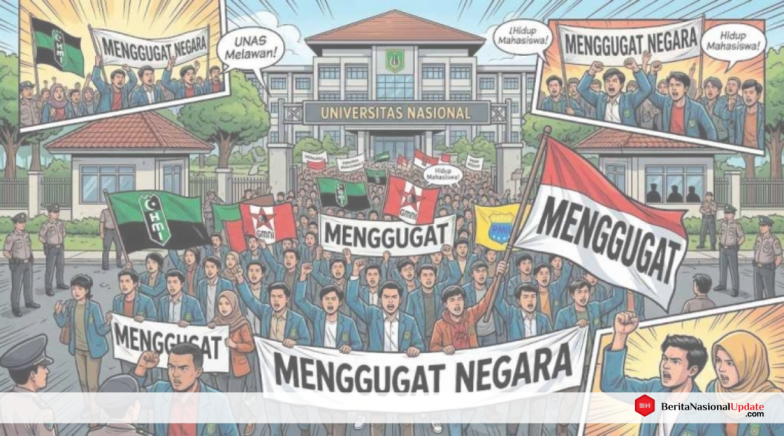
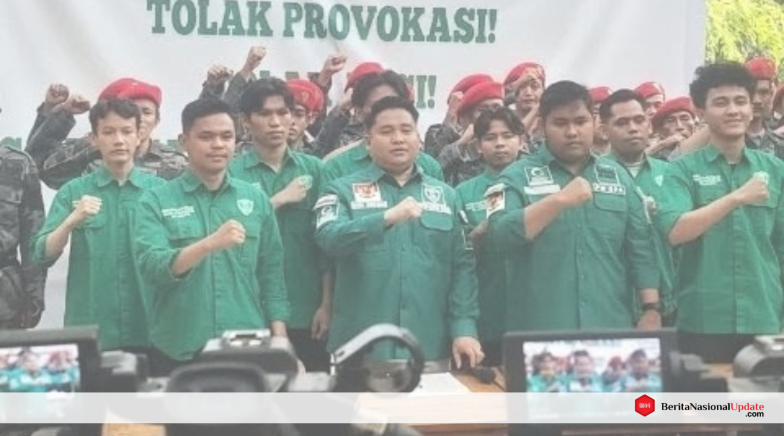
The controversy began with the Indonesian Student Youth Pledge Declaration organised by the Jakarta Metropolitan Police on 29 October 2026. The attendance of Raffi Ahmad, the President's Special Envoy for Youth Development and Arts Workers, subsequently attracted public scrutiny following allegations that some participants were not active university students and that some had received payment to attend. This situation raised fundamental questions about the authenticity of student representation and the credibility of an event invoking the symbols of the youth movement.
Such criticism has a basis that deserves consideration. The Youth Pledge is not merely a ceremonial occasion, but a historical symbol of collective consciousness, national unity, and youth participation. Therefore, activities conducted in the name of students should ensure transparency regarding participants' identities, representation, and purpose of participation. State institutions need to exercise greater care when invoking symbols that carry strong historical and emotional legitimacy in society. Nevertheless, every generation also has the right to commemorate and interpret this historic occasion in its own way, provided that such activities remain within the bounds of positive and constructive engagement.
In my view, neither Raffi Ahmad's attendance as an invited guest nor the allegations concerning participants who were not university students should necessarily become an issue in themselves. Celebrating the Youth Pledge is a right shared by all Indonesian generations of young people, even when the celebration incorporates contemporary gimmicks designed simply to create a lasting presence in today's culture of digital virality.
Second, public officials should not always be expected to exercise excessive caution and accountability when celebrating a sacred national occasion alongside younger generations.
Raffi Ahmad occupies two positions that should be analytically distinguished. On the one hand, he is a public official entrusted with a specific mandate in youth development and arts workers. On the other, he is an entertainment and business figure associated with RANS. The Jakarta Metropolitan Police stated that Raffi attended the declaration as an invited guest. This clarification is important because attendance should be distinguished from responsibility for organising an event.
When it comes to commemorating an important national occasion, I believe public officials do not always need to play it safe. If an official receives an invitation to attend a celebration and reflection on the Youth Pledge, attending should be a reasonable choice rather than ignoring the invitation simply because the event takes place on a different date. In today's digital era, different groups and generations are free to choose their own moments and ways of commemorating historical occasions. There is nothing inherently unusual about that.
Third, cancel culture is neither a tradition nor a reflection of the wisdom of a cohesive and close-knit society.
The decision by musicians and MSME participants to withdraw from RANS Carnival is a choice that must be respected. In a democracy, people have the right to express disagreement through criticism, rejection, or decisions not to participate in particular activities. There is no reason to challenge that right as long as it is exercised peacefully and within the law.
However, the economic dimension should not disappear from the debate. Withdrawals do not affect only event organisers or the public figures targeted by criticism. Stage workers, technical crews, service providers, food vendors, raw-material suppliers, and small-business owners may also lose economic opportunities. These groups are not necessarily involved in the controversy that triggered the boycott.
Statistics Indonesia (BPS) reported that the creative economy employed approximately 27.4 million people in 2025, equivalent to 18.70 percent of the national workforce (BPS, 2025). This figure demonstrates the significant role of the creative economy in Indonesia's employment structure. The entertainment industry and festival activities provide spaces where artists, service providers, creative communities, and MSMEs can connect with consumers.
These national figures cannot be used to calculate the specific financial losses incurred by RANS Carnival. Nor can we assume that every festival participant necessarily benefits financially. Nevertheless, the data provide sufficient context to explain why the sustainability of creative-economy activities deserves consideration when political controversies spill over into the economic sphere. Criticism of a public official should not render the interests of workers and small businesses invisible.
One thing is certain: cancel culture has never been an inherent part of our collective social psychology when viewed against the traditions and cultural values that have long shaped our social fabric. Nor is it a conventional feature of business dynamics or commercial competition, where competitiveness is generally driven by the quality of creative work and the strength of ideas. The recent incident therefore sets a rather unfavourable precedent when considered against our local wisdom as a nation that places great value on hospitality, warmth, and friendliness.
Share News
For Add Product Review,You Need To Login First