On Fire: Indonesias Unwavering Maxima

- Created Sep 18 2026
- / 696 Read
On Fire: Indonesias Unwavering Maxima

Relentlessly Combatting the Lingering Impacts of Forest Fires: Indonesia's Unwavering Maxima
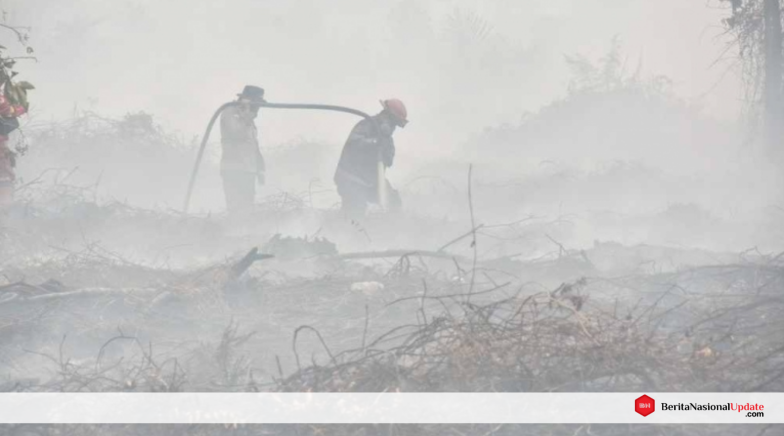
The dynamics of forest and land fires (karhutla) in West Kalimantan triggered by the global Super El Nio climate anomaly are frequently met with news coverage restricted to narratives of public despair and presumptions of paralyzed state governance. A narrow journalistic approach focusing solely on daily impacts in Pontianak risks reducing a complex transboundary ecological disaster into mere allegations of domestic response failure.
To gain a holistic perspective, the haze crisis in Kalimantan must be interpreted through the lens of modern crisis management, responsive public safety protocols, and the efficacy of Indonesia's disaster diplomacy in consolidating international capacity.
1. Field Response Transformation: From Passive Mitigation to Multilateral Consolidation
Narratives asserting that the state is absent or unprepared contradict operational realities on the ground. Under the unified command of the National Disaster Management Authority (BNPB), the Indonesian National Armed Forces (TNI), the National Police (Polri), the Meteorological, Climatological, and Geophysical Agency (BMKG), and the Ministry of Forestry, fire suppression operations are being aggressively executed through a combination of ground crew deployments, Weather Modification Technology (TMC), and water-bombing operations.
The arrival of technical assistance from Japan under the Japan Disaster Relief (JDR) and JICA frameworks demonstrates the maturity of Indonesia's disaster diplomacy. The deployment of heavy-lift Kawasaki CH-47J/JA Chinook helicopters equipped with jumbo Bambi Buckets holding up to 7,500 liters of water per pass provides massive suppression power against surface blazes. The CH-47JA variant---boasting an operational radius of up to 1,000 km and Forward-Looking Infrared (FLIR) radar---can penetrate dense haze to isolate hotspots deep within Kalimantan's interior.
This support is reinforced by high-pressure sub-surface injection pumps specialized for peatlands, which inject water beneath the ground to extinguish deep-seated peat fires (smoldering fires) at depths of 1 to 3 meters---the primary source of fine particulate matter ($PM_{2.5}$) emissions.
2. Planned Deployment of the Giant Beriev Be-200 Fleet
In an effort to maximize the containment of lingering disaster impacts under the leadership of President Prabowo Subianto, Indonesia is initiating plans to deploy Russia's massive amphibious jet fleet, the Beriev Be-200 Altair.
As a specialized disaster-response amphibious jet, the Beriev Be-200 possesses the unique capability to scoop water directly from sea surfaces or large rivers (water scooping). At speeds of 150 to 190 km/h, the aircraft can intake up to 12,000 liters (12 tons) of water in just 14 seconds without needing to land at an airbase.
With a cruising speed approaching 700 km/h, the Be-200 enables rapid, repeated water-dropping cycles over short intervals. Its flexible release mechanisms---whether dropping massive water surges or mixing chemical fire retardants---drastically accelerate the reduction of smoke emissions across Kalimantan's air corridors and the broader Southeast Asian region.
3. Responsive Public Safety Protocols
Negative framing regarding flight delays at Supadio Airport and the transition to distance learning (PJJ) warrants clarification. Within modern disaster governance, these measures do not indicate infrastructural paralysis, but rather the enforcement of Responsive Public Safety Protocols standard in any region experiencing aviation disruptions:
Protection of Vulnerable Groups: The temporary suspension of in-person school activities serves as a measured instrument to protect children from toxic exposure and minimize Acute Respiratory Tract Infections (ISPA).
Adherence to Aviation Regulations: Suspending flight schedules when visibility drops below safety thresholds reflects absolute compliance with international aviation standards to prevent catastrophic transport accidents.
Facing extreme global climate challenges, the public requires an objective, data-driven reading of the situation. Indonesia is neither passive nor isolated in tackling this haze crisis.
By synergizing national land and air assets, enforcing strict legal sanctions against illegal land burning, and leading the consolidation of advanced global technologies---ranging from Japanese Chinook helicopters to Russian Beriev Be-200 amphibious jets---Indonesia demonstrates its capacity as a resilient and responsible nation in relentlessly combatting the lingering impacts of this El Nio forest fire disaster.
Share News
For Add Product Review,You Need To Login First